
Home Fetal Doppler: Complete Setup and First Use Guide
Step-by-step guide to setting up and using a home fetal doppler for the first time.

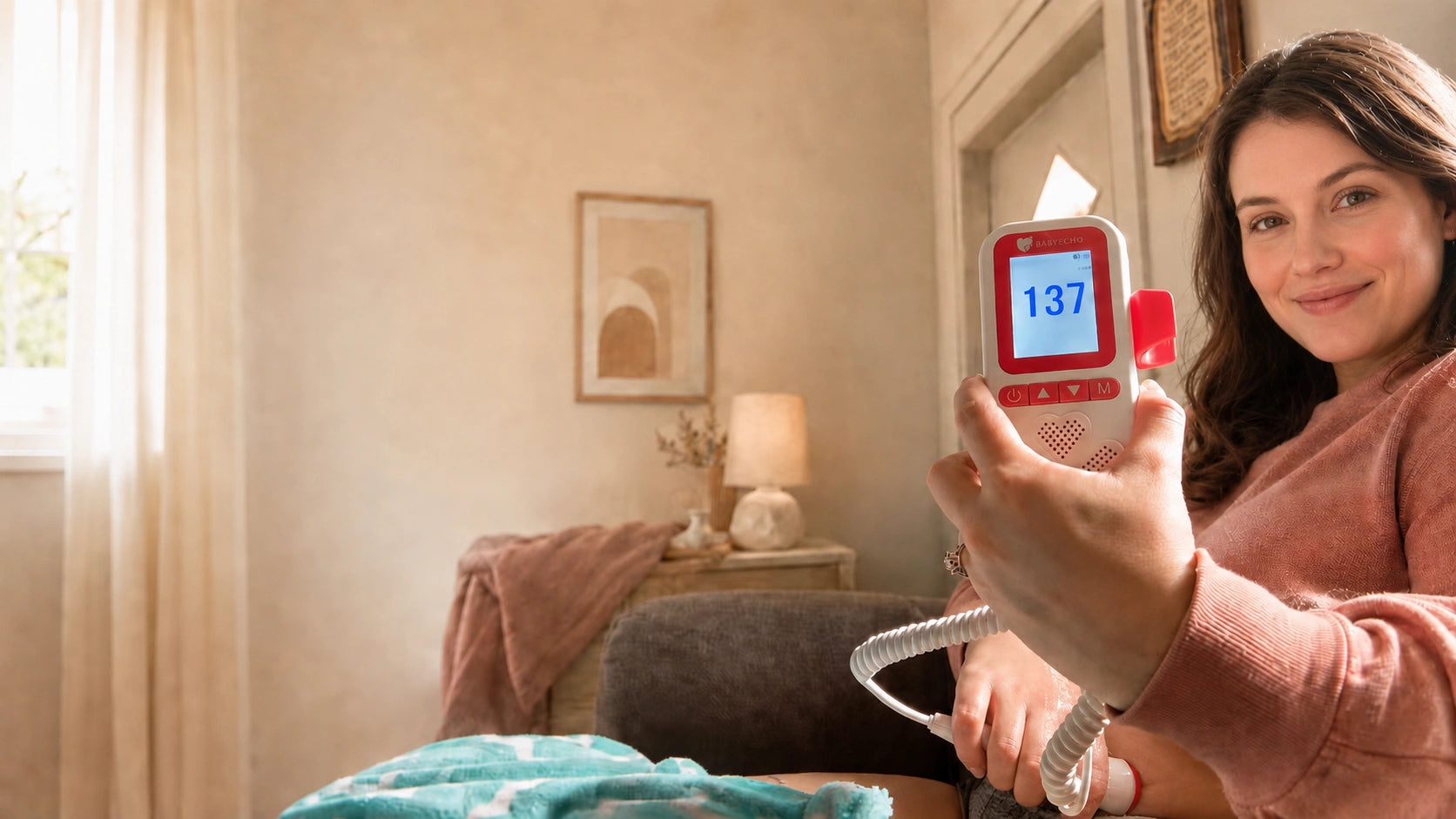
Learn how to use a fetal doppler at home, where to place the probe, when parents may hear baby’s heartbeat, and how to create safe, responsible at-home listening moments during pregnancy.
Step-by-step guide to setting up and using a home fetal doppler for the first time.
Compare fetal Dopplers, fetoscopes and stethoscopes by technology, typical listening timeline, ease of use and suitability for at-home listening.
How early can a fetal doppler detect a heartbeat? Learn the timeline from 6-16 weeks.
Compare fetal Doppler sound with prenatal ultrasound images, purpose, timing, and limits.
Understand fetal heart-rate ranges in clinical context and why a brief home Doppler number cannot diagnose or confirm wellbeing.
Normal fetal heart rate by week explained: from 6-40 weeks. Learn what is normal, when to worry about fast or slow heart rate, and how to monitor at home safely. Evidence-based guide with week-by-week reference table.
Many providers may detect a baby’s heartbeat with a Doppler around 10–12 weeks, while at-home listening is often easier from 12–16 weeks. See what affects timing and what to try.
Compare Sonoline B and Babyecho Pro using exact records and current product details rather than assumptions.
Compare where to buy a fetal doppler online or in store, what to check before ordering, and which Babyecho model fits your needs.
Compare the features that matter when choosing the best fetal doppler for home use, including sound, probe quality, gel, power, display, app features, support, and responsible use.
Continue learning with Babyecho's fetal doppler guides, product pages, and responsible-use resources.


